
Agentic AI and the Rise of the Process Intelligence Engine (PIE)
Why the enterprise of the future will not be run by applications — but by PIEs.


Why the enterprise of the future will not be run by applications — but by PIEs.

How agentic AI shifts the primary source of competitive advantage from applications toward process intelligence.

The proportion of effort an enterprise allocates to Governance, Risk, and Compliance (GRC) across all functions varies by industry, regulatory demands, and risk exposure. Generally, for enterprise-level businesses, GRC operations are distributed in the following proportions:

Traditional AI-based chatbots in the customer service sector are becoming outdated due to their limited capabilities, particularly in delivering hyper-personalization and human-like responses to customers.
The advent of modern artificial intelligence has ushered in a new era of technological advancement, with large language models (LLMs) at the forefront of this revolution. As businesses and individuals grapple with the challenge of selecting the right AI tool for their needs, three major players have emerged in the LLM space: OpenAI’s GPT, Anthropic’s Claude, and Google’s Gemini.

In today’s rapidly evolving landscape of healthcare, technology plays an increasingly pivotal role in improving patient outcomes, enhancing diagnostics, and transforming treatment methodologies. One such technological innovation that has garnered significant attention is Software as a Medical Device (SaMD).

The concept of digital therapeutics revolves around the use of clinically validated software programs or devices that are intended to prevent, manage, or treat a wide range of health conditions, including chronic diseases such as diabetes, cardiovascular diseases, mental health disorders, and more. These digital interventions are typically delivered through mobile apps, web-based platforms, or wearable devices. They are designed to provide patients with engaging and interactive experiences that promote behavior change, self-care, and health management.

The emergence of generative AI has ushered in a transformative era with abundant possibilities in the healthcare industry. Its capacity to generate new data, enhance diagnostics, optimize treatment approaches, and accelerate drug discovery is revolutionizing healthcare practices. From improving medical imaging and patient care to facilitating personalized medicine and streamlining drug development, this powerful technology offers immense potential for elevating healthcare outcomes. As we continue to harness the potential of generative AI and address its challenges, we stand on the brink of witnessing a new era of innovation and breakthroughs in the field of healthcare.
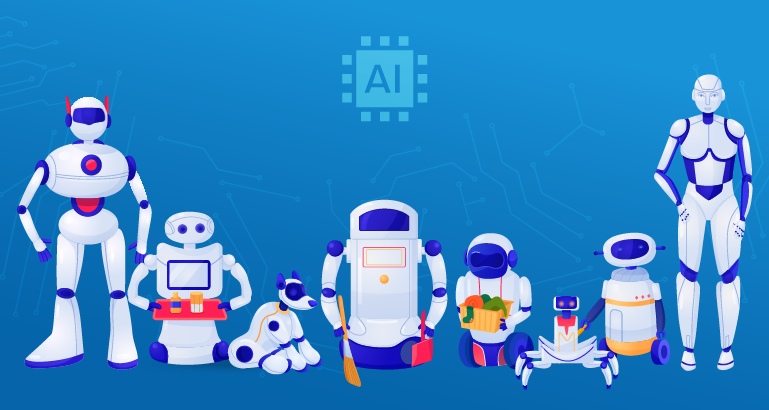
Robotics and AI have assisted in navigating us to a brighter future where they are constantly reshaping our daily lives. We are in a futuristic era where machines and technology are able to anticipate and help humans as per their necessities. The door of endless possibilities has just opened, what we have witnessed so far is just a minuscule part of its potential. Irrespective of the industry, this amalgamation of robotics and AI can be an important part of your digital journey.

As AI becomes more integrated into our lives, concerns about data privacy, cybersecurity, and ethical implications have grown. The very nature of AI, which relies on massive datasets and complex algorithms, creates vulnerabilities that malicious actors can exploit. From adversarial attacks on machine learning models to data breaches that compromise sensitive information, the security landscape of AI is multifaceted and ever-evolving.